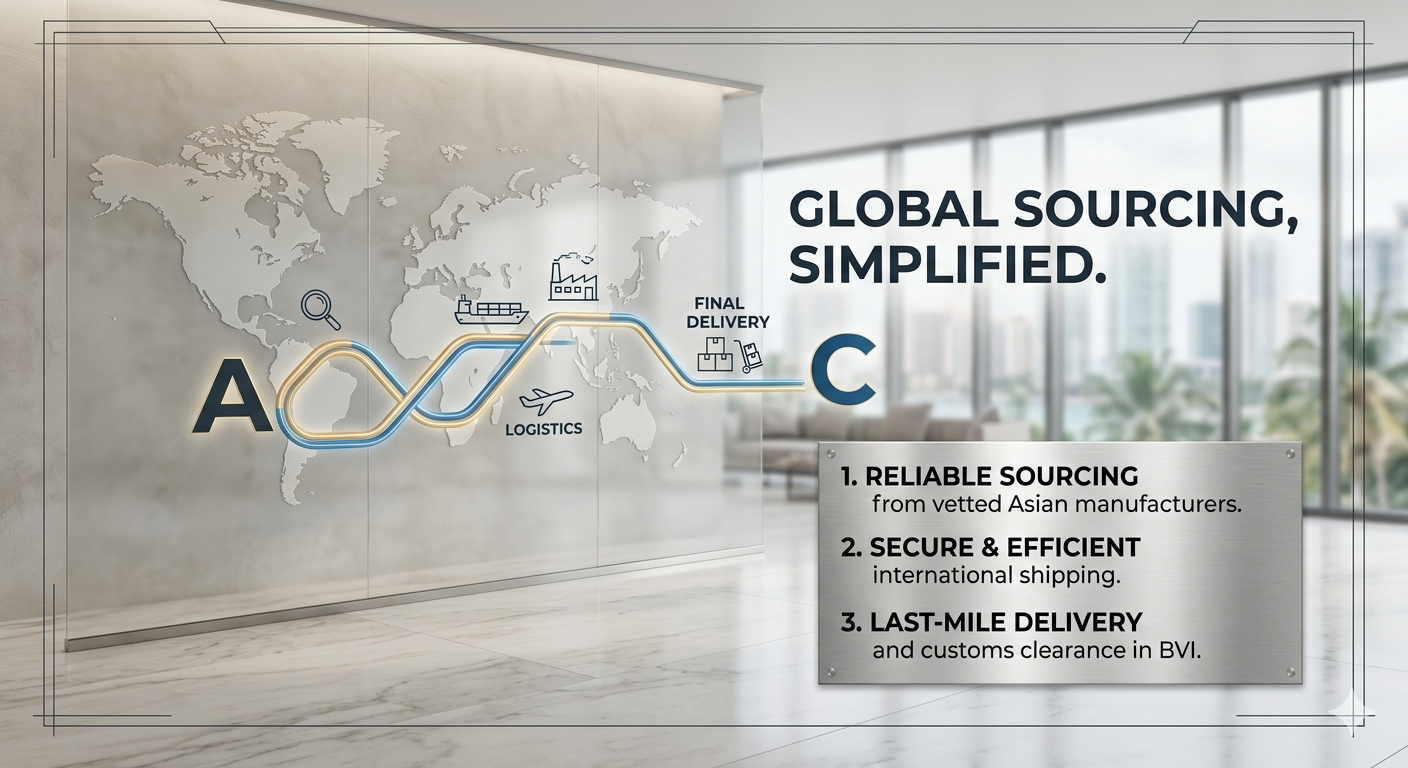
Approving the purchase order often feels like the moment the job is done.
The supplier is chosen.
The quote looks acceptable.
The team wants to move.
But for many BVI businesses, that is exactly where the real risk begins.
Most import problems are not dramatic. They are quiet. A product description that is too vague. A timeline that only covers shipping, not production or clearance. Documents that do not quite match. A supplier who looks established online but is not the actual factory making the goods.
None of those issues feel urgent when the order is being approved. They become urgent later.
That is why the smartest importers do one thing differently: they pause before approval and run a short checklist.
If you want the full customs foundation behind this topic, start with our guides to BVI Customs for Business Owners (Part 1) and Part 2. What follows is the executive version.
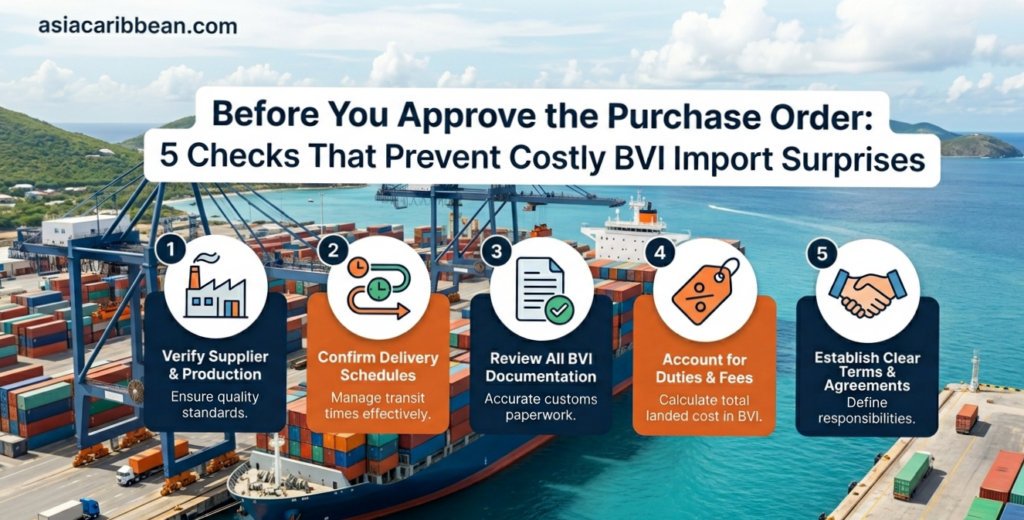
1. Confirm who is actually making the product
A polished quotation is not the same thing as factory visibility.
Before you approve the order, ask a basic question:
Who is the actual manufacturer?
Not the salesperson.
Not the broker.
Not the trading company unless that is fully understood and acceptable.
The factory matters because it affects quality, production control, lead times, and accountability if something changes later.
This is especially important for technical, electrical, hospitality, and fit-out goods, where “similar” products can perform very differently once they land in the BVI.
A useful rule here: if your team cannot clearly explain who is making the goods, where they are being made, and who is responsible for quality, the order is not ready to approve.
This is one of the reasons we tell clients to read Importing to the BVI: 5 Questions to Protect Your Business before they commit.
What to ask before approval
- Who is the factory?
- Is the supplier the manufacturer or a trading company?
- Who handles quality control before shipment?
[Visual suggestion: split image—left side “Supplier”, right side “Actual Factory”, with a clear check mark on “Know both.”]
2. Check the real timeline, not just the shipping date
A shipping date is not a delivery date.
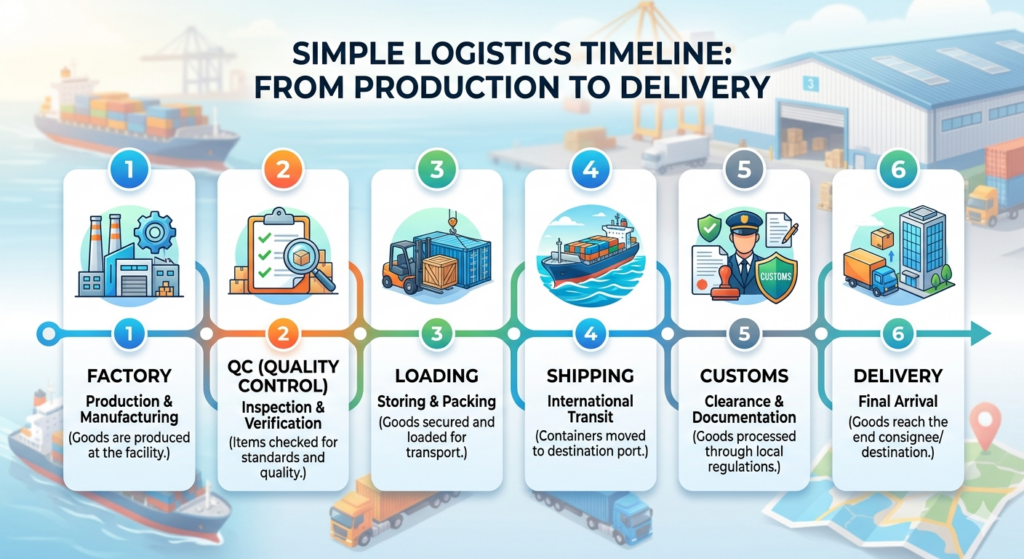
That sounds obvious, but it still catches businesses off guard. A supplier may give you one date that sounds reassuring, while the real timeline includes:
- production time
- quality checks
- booking and loading
- shipping time
- BVI customs and release
- local delivery to your site or warehouse
If your business is ordering against a project deadline, an opening date, or a seasonal demand window, this difference matters.
A calm import plan starts by asking for the full chain, not the most convenient part of it.
This is also where your Reliable Logistics planning becomes part of the buying decision, not something to worry about after the PO is signed.
What to ask before approval
- What is the full timeline from factory to BVI?
- Which parts of the timeline are fixed, and which are estimates?
- What happens if production slips by two weeks?
3. Make sure the documents already tell one clear story
A surprising number of shipment issues start before the cargo even moves.
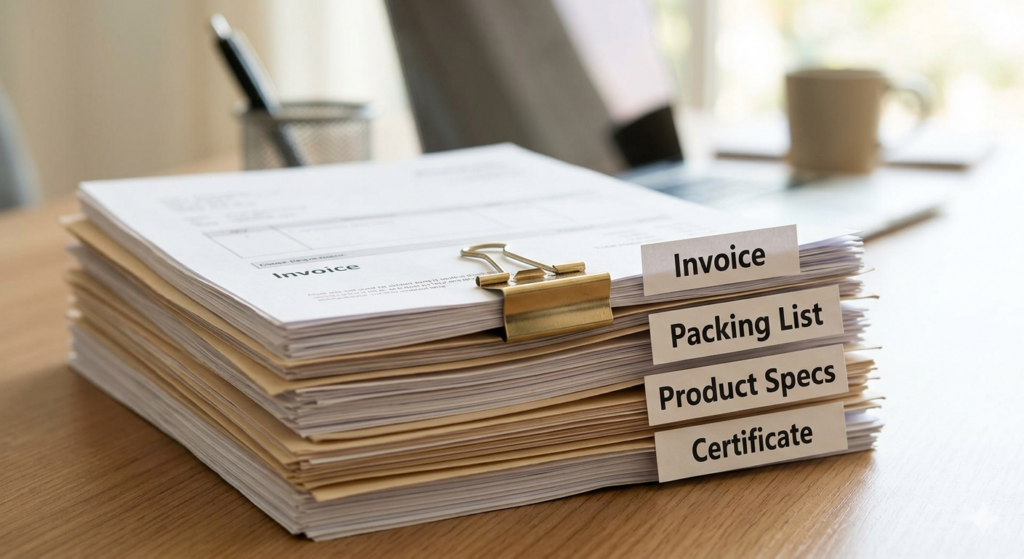
They begin when the invoice, packing list, product description, and technical information do not line up.
That is why documentation should not be treated like admin that happens later. It is part of the buying decision.
Before you approve the order, confirm that the supplier can provide clean, consistent information and that your broker will have what they need early enough to do their job properly.
Our Essential Import Documentation Checklist covers this in more detail, but the principle is simple:
the paperwork should describe the same shipment in the same way, every time.
If it doesn’t, the order is not ready.
What to ask before approval
- Will the invoice, packing list, and product descriptions match?
- Are there any certificates or permits we should be planning for now?
- Does our broker need anything else before the goods leave Asia?
For the deeper customs context, link this back to BVI Customs for Business Owners (Part 1).
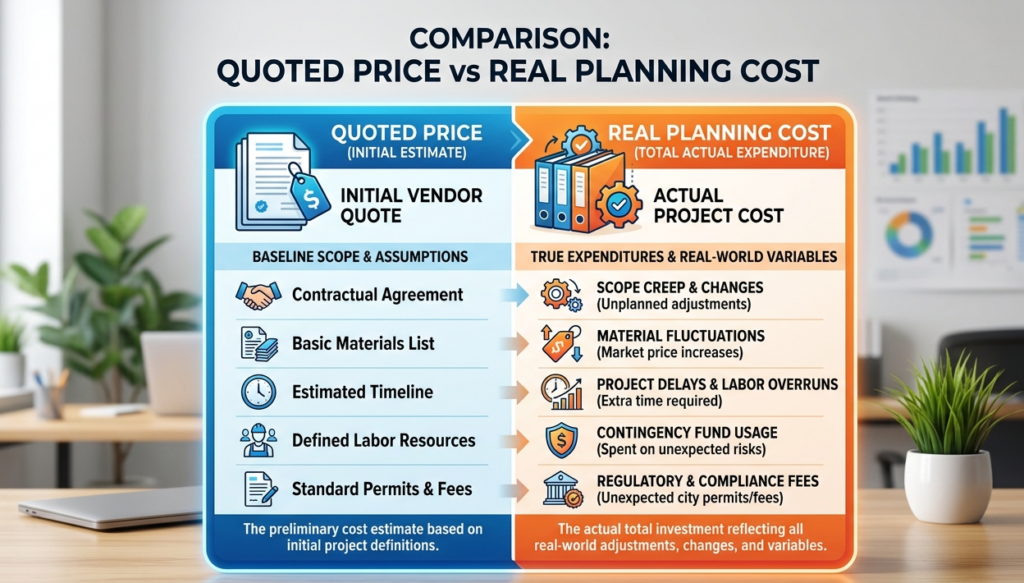
4. Pressure-test the price before you call it “good”
A quote can look attractive and still be incomplete.
That is why smart buyers do not ask only, “What is the price?” They ask, “What is included, what is excluded, and what still needs to be planned for?”
At this stage, you do not need a perfect spreadsheet. You do need enough clarity to avoid approving a number that feels low now and expensive later.
For internal planning, this is where many businesses benefit from thinking in a range:
- a likely working case
- a higher-risk case if timing or charges move against you
That idea is explained in more detail in BVI Customs for Business Owners (Part 2), but the practical point is straightforward:
Don’t approve the order based on the cleanest possible scenario. Approve it based on a realistic one.
What to ask before approval
- Is this price product-only, or does it include more than that?
- What costs still sit outside this quote?
- Has our team allowed for timing, compliance, and coordination risk?
5. Decide now what happens if something goes wrong
This is the question most people leave until they need it.
And by then, the answer is always more expensive.
Before you approve the order, ask:
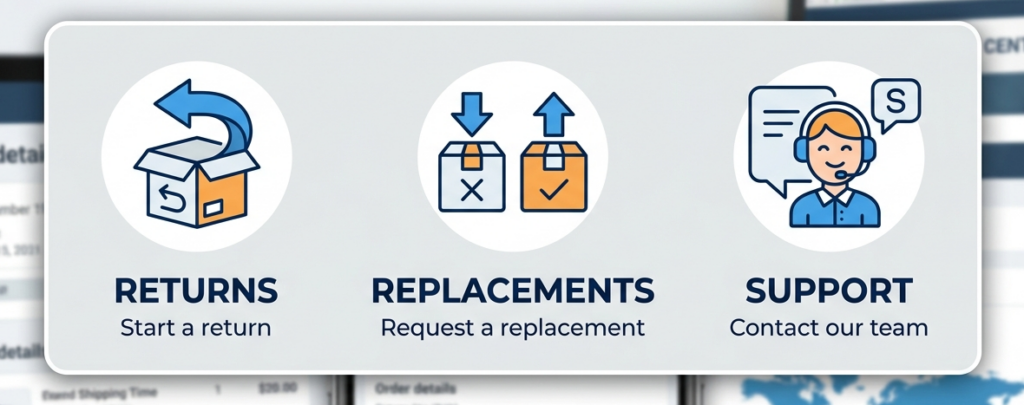
- What happens if the goods arrive damaged?
- What happens if there is a specification issue?
- What happens if part of the order is wrong?
- Who is responsible for replacement, support, or rework?
You are not being difficult by asking this. You are being disciplined.
In the BVI, where replacement cycles can take time and delays can affect projects, inventory, or customer commitments, this is not a minor detail.
It is part of good purchasing.
What to ask before approval
- What is the replacement or remedy process?
- Who pays for which part of the correction?
- Is that process written down clearly?
The calm way to approve an import order
Before the next PO is signed, pause and ask:
- Do we know the actual manufacturer?
- Do we understand the real timeline?
- Do the documents already tell one clear story?
- Have we pressure-tested the price?
- Do we know the plan if something goes wrong?
That pause can save a surprising amount of time, money, and confusion later.
If you want the fuller customs and planning picture, continue with:
- BVI Customs for Business Owners (Part 1)
- BVI Customs for Business Owners (Part 2)
- Resources & Insights for Asia–Caribbean Trade
How AsiaCaribbean fits in
AsiaCaribbean is not Customs, and we are not your lawyer or tax advisor.
What we do is help BVI businesses prepare earlier and more clearly:
- aligning supplier information
- tightening pre-shipment documentation
- helping teams think through real timelines
- and making the import process feel calmer, not more complicated
If you are planning your next order now, book a BVI Import Readiness Review before the goods leave Asia.